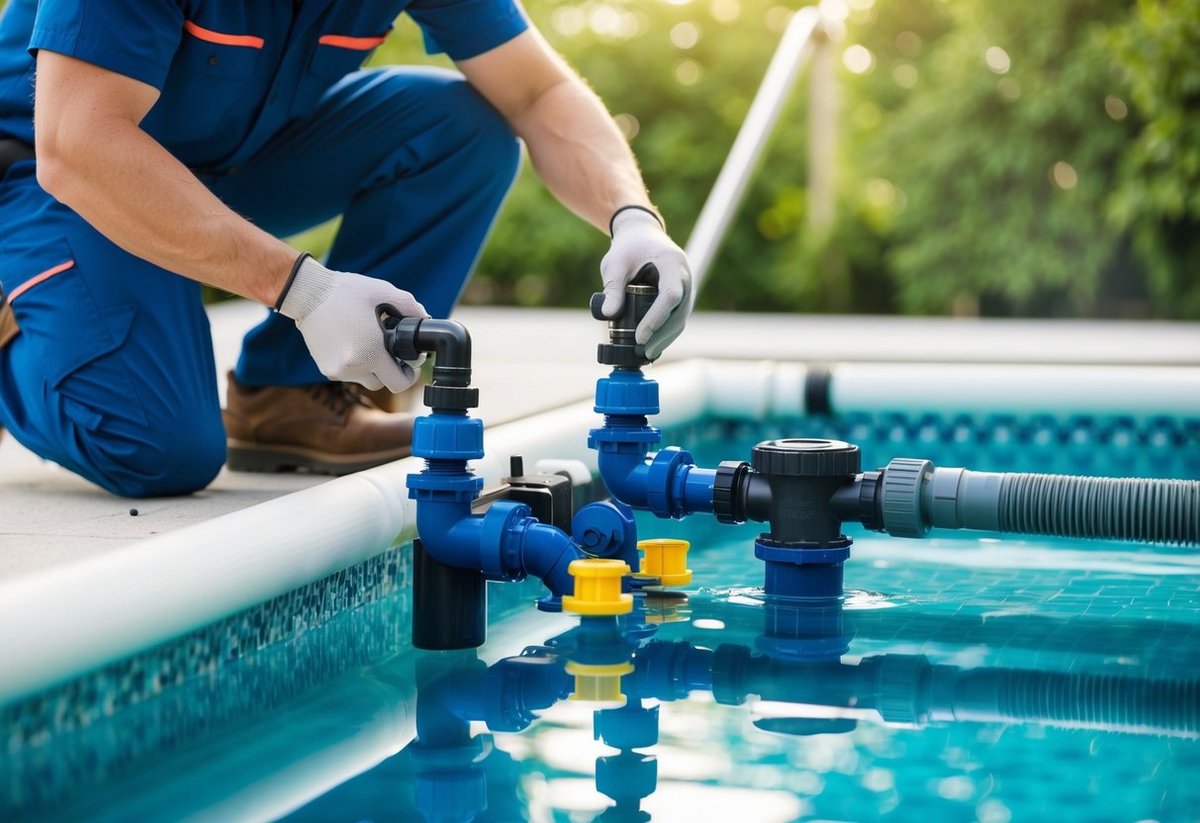
Dreaming of a perpetually sparkling, perfectly balanced saltwater pool that practically takes care of itself? While saltwater pools are renowned for their ease and the luxurious feel of the water, truly optimizing your saltwater pool performance goes beyond basic upkeep. It involves understanding the nuances of your system, proactively preventing issues, and embracing advanced strategies to enhance efficiency, extend equipment life, and maintain pristine water quality with minimal effort.
This isn't just about keeping the water clear; it's about making your saltwater system work smarter, not harder. Let's dive into how you can transform your pool from simply functional to flawlessly optimized.
At a Glance: Your Path to a Perfect Saltwater Pool
- Understand the Core: Your salt chlorine generator creates chlorine from dissolved salt, offering a gentler, more consistent sanitization cycle.
- Master Water Chemistry: Consistent testing and balancing of pH, alkalinity, free chlorine, salt, calcium, and CYA are non-negotiable.
- Stick to a Routine: Daily skimming, weekly testing/brushing, and monthly equipment inspections prevent small issues from becoming big problems.
- Prevent Cell Failure: Regular cleaning and monitoring of your salt cell are key to its longevity and efficient chlorine production.
- Embrace Advanced Tools: Variable speed pumps, automated pH/ORP controllers, and smart pool technology unlock superior performance and energy savings.
- Adapt Seasonally: Adjust your maintenance and generator output to match bather load, weather, and usage patterns.
The Saltwater Advantage: What Makes Your Pool Special?
Unlike traditional chlorine pools that rely on adding chlorine pucks or liquid, your saltwater pool is a self-sustaining sanitizer factory. A salt chlorine generator (often called a "salt cell" or "chlorinator cell") converts dissolved sodium chloride (plain old pool salt) into active chlorine through a process called electrolysis. This chlorine then cleanses your water, and when its job is done, it reverts back into salt, ready to be converted again.
This continuous, closed-loop cycle means:
- Silky Smooth Water: Say goodbye to harsh chemical smells and skin irritation.
- Reduced Chemical Handling: Less lugging, pouring, and storing harsh chemicals.
- Consistent Sanitization: A steady, automated chlorine supply means fewer peaks and valleys in your water chemistry.
- Lower Long-Term Costs: While the initial investment might be higher, ongoing chemical expenses are significantly reduced.
Key components working in harmony include the salt cell (where the magic happens), a control unit (your system's brain), a flow sensor (to ensure water is moving), and a salt level sensor (to monitor concentration). To truly get the most out of your setup, it's vital to understand these elements, and we've got a comprehensive resource for you: Your guide to pool salt generators delves into everything you need to know about these essential devices.
The Foundation: Precision Water Chemistry for Peak Performance
A saltwater pool demands precise water chemistry to perform at its best. Unbalanced water can lead to equipment corrosion, unsightly scaling, inefficient chlorine production, and an uncomfortable swimming experience. Think of water chemistry as the operating system for your pool; if it's off, everything else struggles.
Here are the ideal ranges you should aim for, and why each matters:
- pH Level (7.2 – 7.6): This measures how acidic or basic your water is. In saltwater pools, pH tends to drift higher due to the electrolysis process. High pH reduces chlorine effectiveness and can cause scaling and eye irritation. Low pH is corrosive.
- Total Alkalinity (TA) (80 – 120 ppm): TA acts as a buffer, stabilizing your pH. If TA is too low, pH can fluctuate wildly; if too high, pH becomes difficult to adjust.
- Free Chlorine (1 – 3 ppm): This is your active sanitizer, keeping bacteria and algae at bay. Your salt cell is designed to maintain this level automatically, but you need to monitor it.
- Salt Level (2,700 – 4,500 ppm): Most systems operate optimally between 3,000-3,500 ppm. Too low, and your salt cell can't produce enough chlorine; too high, and it can damage equipment or create an uncomfortable taste.
- Calcium Hardness (200 – 400 ppm): This prevents soft water from becoming corrosive to plaster and equipment, and hard water from causing scaling. Maintaining the right balance is crucial.
- Cyanuric Acid (CYA / Stabilizer) (30 – 50 ppm): CYA protects chlorine from degradation by UV rays. Saltwater systems produce unstabilized chlorine, so CYA is vital, but too much can reduce chlorine's effectiveness. Note that saltwater pools generally need a lower CYA than traditional pools.
Pro Tip: Always collect water samples from elbow depth, away from return jets, for the most accurate readings. Invest in a high-quality liquid test kit over strips for superior precision.
Your Regular Rhythm: Essential Maintenance Routines
Consistency is king in pool care. Establishing a routine helps you stay ahead of potential problems and ensures your pool is always ready for a dip.
Daily Habits: A Quick Visual Check
These quick checks ensure everything is running smoothly and catch minor issues before they escalate.
- Skim & Empty: Remove leaves, insects, and debris from the surface. Empty your skimmer baskets.
- Check Pump Basket: Inspect and empty your pump basket every few days, or daily during heavy use or after storms. A full basket restricts flow and strains your pump.
- Visual Scan: Look at your water clarity, check equipment for unusual noises or leaks, and glance at your salt cell indicators for any alerts.
Weekly Tasks: Staying on Top of Chemistry and Cleanliness
This is where you actively engage with your pool's health.
- Water Testing: Test pH, total alkalinity, free chlorine, and salt levels. Record your results to track trends. Adjust chemicals as needed.
- Vacuum: Clean the pool floor, paying attention to steps, corners, and areas around lights where debris settles.
- Brush Walls & Tile Line: Use a brush (stainless steel for concrete/gunite, nylon for vinyl/fiberglass) to dislodge algae and calcium buildup before it can take hold. This is a simple yet powerful preventative measure.
- Filter Cleaning:
- Sand Filters: Backwash when the pressure gauge rises 8-10 psi above its clean operating pressure.
- Cartridge Filters: Rinse cartridges weekly with a hose. Deep clean monthly using a specialized filter cleaner.
- DE Filters: Backwash when pressure rises, then add fresh Diatomaceous Earth according to manufacturer instructions.
Monthly Deep Dive: Comprehensive System Health
Once a month, take a closer look at your equipment and perform more detailed water analyses.
- Inspect and Clean Salt Cell: This is perhaps the most critical monthly task for saltwater pool owners. Turn off power to the cell, remove it, and inspect the plates for calcium buildup (scaling). If present, soak the cell in a diluted solution (e.g., 10:1 water-to-muriatic acid) until the scaling dissolves. Always follow safety guidelines for acid handling.
- Comprehensive Water Testing: Go beyond the basics to check Total Dissolved Solids (TDS), Phosphate levels (a common algae nutrient), and Metal content (iron, copper, manganese). High TDS (above 1,500 ppm over starting levels) may necessitate a partial drain and refill. Also, calculate your Saturation Index to assess your water's corrosivity or scaling potential.
- Equipment Inspection: Thoroughly check all pool equipment for leaks, signs of electrical corrosion, GFCI (Ground Fault Circuit Interrupter) function, proper lighting, and the operation of any automatic cleaners.
Seasonal Shifts: Adapting Your Approach Year-Round
Pool care isn't static; it evolves with the seasons. Adjusting your maintenance and generator output maximizes efficiency and extends equipment life.
- Spring Opening: After the winter slumber, clean your cover, reinstall all equipment, fill the pool, and start circulation. Test and balance your water. Clean and reinstall your salt cell, then gradually restart your generator. Allow 24-48 hours between adjustments to see the full effect of chemical changes.
- Peak Season (Summer): High bather loads, intense sun, and warm temperatures mean increased chlorine demand. Increase water testing to 2-3 times weekly, monitor your salt cell closely, and consider running your pump longer to ensure adequate circulation.
- Winding Down (Fall): As temperatures drop and usage decreases, gradually reduce your salt generator output. Continue balancing water chemistry, remove and store any non-essential equipment, and reduce filtration run times. This is also a good time to plan any off-season repairs or upgrades.
- Year-Round (Winterizing or Low-Use Season): If you operate your pool year-round in milder climates, reduce your salt generator output by 25-50%. Maintain circulation (with reduced run times), continue weekly testing, and monitor for algae, especially if temperatures fluctuate. This period is ideal for deeper maintenance tasks.
Solving the Riddles: Troubleshooting Common Saltwater Pool Headaches
Even with the best maintenance, issues can arise. Knowing how to diagnose and address common problems quickly is a hallmark of an optimized system.
- Low Chlorine Production:
- Cause: Often a dirty or scaled salt cell, low salt levels, high cyanuric acid, or an aging cell.
- Fix: Clean the cell (acid wash), add pool salt to bring levels into range, or dilute high CYA (requires partial draining and refilling). If the cell is over 3-4 years old, it might be reaching the end of its lifespan.
- High pH Drift:
- Cause: The electrolysis process itself naturally raises pH, high total alkalinity, or excessive aeration (water features, jets).
- Fix: Add muriatic acid to lower pH. If TA is consistently high, reduce it carefully (consult a pool professional). Consider a pH automation system for continuous control.
- Calcium Scaling (White Deposits):
- Cause: High calcium hardness, high pH, high alkalinity, or poor circulation.
- Fix: Lower calcium via partial dilution of pool water. Maintain proper pH and alkalinity. Use scale inhibitors (sequestering agents). Improve circulation by checking pump/filter and running times.
- Corrosion Issues (Rust, Pitting):
- Cause: Low pH/alkalinity (acidic water), galvanic corrosion (dissimilar metals in contact), or improper electrical bonding.
- Fix: Maintain proper water balance. Use sacrificial anodes (zinc anodes) in your skimmer or plumbing to protect other metals. Ensure all pool equipment is properly bonded according to electrical codes.
Beyond the Basics: Advanced Optimization Strategies
True optimization comes from moving beyond reactive fixes to proactive, strategic management. These advanced techniques not only save you time and money but also contribute to a healthier, more sustainable pool environment.
1. Optimal Water Flow: The Lifeblood of Your System
Your salt cell needs adequate water flow to operate efficiently and safely. Most cells require a minimum flow rate of 20-25 gallons per minute (GPM).
- Monitor Flow: If your system doesn't have a built-in flow sensor, consider installing one. Restricted flow leads to inefficient chlorine production and can damage the cell.
- Variable Speed Pumps (VSPs): This is perhaps the single most impactful upgrade for energy efficiency. VSPs allow you to run your pump at lower, consistent speeds, which not only saves up to 80% on energy costs but also provides better filtration and gentler water circulation, improving salt cell performance.
2. Advanced Salt Cell Cleaning & Monitoring
Your salt cell is the heart of your saltwater system. Treating it right extends its life and ensures consistent chlorine output.
- Pre-Filtration: Consider installing a pre-filter or screen before your pump to catch finer debris that could otherwise pass through to the salt cell, reducing buildup.
- Reverse Polarity: Many modern salt cells have a self-cleaning feature via reverse polarity. Manually trigger this cleaning cycle during periods of heavy use or if you notice slight scaling before it becomes severe.
- Preventive Acid Washes: In areas with hard water, schedule quarterly preventive acid washes for your salt cell, even if visual scaling isn't severe. This prevents microscopic buildup from impacting performance. Use only manufacturer-approved cleaning solutions.
- Cell Rotation: If you have multiple salt cells, consider rotating them or ensuring even wear.
- Detailed Monitoring: Track your salt cell's amperage draw, voltage output, and correlated water temperature. Most cells are rated for 10,000-15,000 production hours. Plan for replacement at 80% of rated life (8,000-12,000 hours) or when you observe a consistent 25% decline in chlorine production despite proper salt levels and water balance.
3. Automated Controllers: The Future of Pool Management
Automating key chemistry parameters liberates you from constant manual adjustments.
- pH Controllers: These systems continuously monitor your pool's pH and automatically dose small amounts of muriatic acid when needed, maintaining your target pH without manual intervention. This is particularly valuable for saltwater pools prone to high pH drift.
- ORP (Oxidation-Reduction Potential) Controllers: ORP measures the sanitizing effectiveness of your chlorine, not just its quantity. A target ORP of 650-750 mV indicates excellent sanitation. ORP controllers automatically adjust your salt cell's output based on real-time demand, ensuring ideal chlorine levels and preventing over- or under-chlorination.
4. Smart Pool Technology & Connectivity
Imagine controlling your pool from your smartphone, receiving alerts, and optimizing energy use without lifting a finger.
- Integrated Systems: Brands like Hayward OmniLogic or Pentair IntelliCenter offer comprehensive smart systems that integrate pumps, heaters, lights, and salt generators.
- Alerts & Reminders: Receive real-time alerts for water chemistry imbalances, equipment status, and maintenance reminders directly to your device.
- Energy Tracking: Monitor your pool's energy consumption to identify trends and areas for further optimization.
5. Variable Speed Pump Strategies
Beyond just saving energy, VSPs offer intelligent ways to run your pool.
- Flow-Based Scheduling: Program your pump to maintain specific flow rates for different activities (e.g., higher flow during cleaning cycles, lower for general circulation).
- Temperature Compensation: Integrate your pump with a temperature sensor to adjust flow rates, ensuring proper heat distribution or reducing circulation in colder months.
- Utility Rate Optimization: Program your VSP to run at higher speeds during off-peak electricity hours and lower speeds during peak demand, significantly cutting costs.
6. Demand-Based Salt Generator Operation
Don't just set your generator to a fixed percentage; make it responsive to your pool's needs.
- Temperature Adjustment: Increase output in hot weather (chlorine dissipates faster) and reduce it in cooler weather.
- Bather Load: Increase output temporarily after heavy use (pool parties, multiple swimmers) to handle increased contaminant loads.
- Seasonal Needs: Reduce output by 30-50% during the off-season when usage is low.
7. Energy Efficiency Beyond the Pump
Look at other areas where your pool consumes energy.
- Solar Heating Systems: Extend your swimming season by 2-3 months and reduce heating costs by 50-80% using solar energy to warm your water.
- LED Pool Lighting: Upgrade old incandescent lights to modern LED systems. They consume 75-80% less energy and can last 15-20 years.
- Smart Power Management: Utilize load sequencing and time-of-use optimization (often integrated into smart pool systems) to reduce peak demand charges by staggering when equipment runs.
Your Burning Questions Answered: FAQ
Here are answers to some common questions about optimizing saltwater pool performance:
- Do I need to add salt often? No, salt doesn't evaporate. You typically only need to add 1-2 bags per year, primarily to compensate for water lost through backwashing, splash-out, or draining.
- Do saltwater pools still need to be "shocked"? Yes, occasionally. Use non-chlorine shock for routine maintenance or calcium hypochlorite for algae outbreaks or heavy sanitization needs.
- Why is my saltwater pool green? Green water usually indicates insufficient chlorine (often due to a dirty cell, low salt, or high CYA) or poor circulation. Address these factors, then shock the pool.
- How long does a salt cell typically last? With proper maintenance, a salt cell usually lasts 3-5 years. Regular cleaning and consistent water chemistry are key to maximizing its lifespan.
- Is corrosion more common in saltwater pools? Some increased corrosion risk is normal due to the dissolved salt. However, you can minimize it by maintaining proper water balance, selecting salt-compatible equipment, and ensuring good electrical bonding.
- Can I convert my existing chlorine pool to saltwater? Most chlorine pools can be converted. You'll need to install a salt chlorine generator and ensure your existing equipment (pump, filter, heater) is salt-compatible or upgrade as needed.
Your Next Dive Into Perfection
Optimizing your saltwater pool performance isn't a one-time task; it's an ongoing journey of learning and adaptation. By understanding the science behind your system, committing to consistent maintenance, and strategically implementing advanced technologies, you'll enjoy unparalleled water quality, extend your equipment's lifespan, and significantly reduce your long-term operating costs.
Start by mastering your water chemistry, then progressively introduce advanced strategies like variable speed pumps or automated controllers. The result? A pristine, energy-efficient saltwater oasis that provides endless enjoyment with minimal fuss. Dive in and experience the difference!