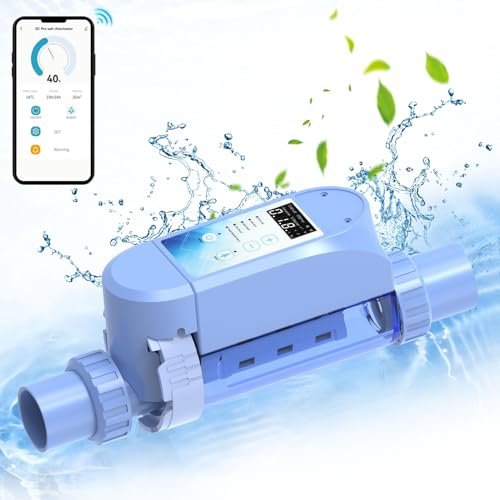
Dreaming of a pool that's kinder to your skin, easier on your wallet long-term, and requires less chemical wrangling? You've likely considered a saltwater system. But before diving in, understanding the real Saltwater Pool Generator Costs, Savings, and Comparisons is key to making an informed decision. This isn't just about the price tag; it's about the entire lifecycle, from installation to daily enjoyment, ensuring your investment pays off in both comfort and cash.
At a Glance: Saltwater Pool Generators
- Softer Water: Experience less irritation for skin, hair, and eyes compared to traditional chlorine pools.
- Reduced Chemical Handling: Say goodbye to frequent trips to the pool store for chlorine pucks and liquid shock.
- Lower Annual Costs: After the initial setup, you'll spend significantly less on chemicals each year.
- Initial Investment: Expect a higher upfront cost ($1,200-$2,700) than a traditional chlorine system.
- Break-Even Point: Typically 3-5 years, thanks to ongoing savings.
- Main Types: Drop-in, Return Jet, and Hard Plumbing systems, each with unique installation and features.
- Required Maintenance: Still need to test water, but routine upkeep is simpler.
The Clear Difference: How Saltwater Pools Work
Unlike traditional pools that rely on adding manufactured chlorine products, saltwater pools create their own. They use a salt chlorine generator, a clever piece of equipment that converts dissolved salt (sodium chloride) into chlorine through a process called electrolysis. This self-renewing cycle means constant, natural sanitation without the harsh effects often associated with traditional chlorine.
You're not turning your pool into a mini-ocean, though. Salt levels typically hover around 3,000-3,500 parts per million (ppm)—a mere fraction of ocean water's 35,000 ppm. This low concentration is why the water feels so incredibly soft and gentle, reducing red eyes, dry skin, and faded swimwear. Plus, less direct chemical handling means a safer, more convenient pool experience for everyone. If you're looking to upgrade your pool experience, it's worth exploring the details of how these systems work; Learn more about pool salt generators and transform your backyard oasis.
Decoding Saltwater Generator Systems: Which Type is Right for You?
Not all saltwater systems are created equal. They generally fall into three categories, each catering to different needs, budgets, and installation preferences. Understanding these distinctions is crucial for comparing options and pinpointing the best fit for your swimming sanctuary.
1. Drop-in Saltwater Systems: The Budget-Friendly Intro
These are the most economical and straightforward entry points into saltwater chlorination. Imagine a compact unit that simply hangs over your pool wall, with its cell directly submerged in the water.
- How They Work: They use a low voltage power supply to convert salt (at a very low concentration, less than a teaspoon per gallon) into chlorine directly in the pool water.
- Key Features: No plumbing required, making them incredibly easy to install on both new and existing pools. Think models like Chlorease Ultra, Solax Saltron Retro, or Solaxx Saltron Retro XL.
- Best For: Above-ground pools, smaller in-ground pools, or budget-conscious homeowners looking for a simple, DIY-friendly conversion.
2. Return Jet Saltwater Systems: Sleek Design, Enhanced Control
Stepping up in sophistication, return jet systems offer a more integrated solution that attaches to your pool's existing water jet return fitting on the outside of the pool wall.
- How They Work: Similar to drop-ins, they use electrolysis with low salt concentration, but the generation happens more discretely within the system connected to the return line.
- Key Features: These systems, like the Solaxx Retro Jet RJ or Hayward Aqualtrol RJ, boast a sleeker aesthetic, often including control panels to help monitor and calculate salt levels. They also keep the chlorine-generating cell safely out of accidental contact with swimmers. Hayward Salt & Swim ABG is another popular option.
- Best For: Owners of above-ground or smaller in-ground pools who want a cleaner look, more automated control, and prefer not to have a unit hanging directly in the pool.
3. Hard Plumbing Saltwater Systems: The Professional Standard
For serious pool owners seeking the most robust and integrated solution, hard plumbing systems are the gold standard. These units become a permanent part of your pool's filtration system.
- How They Work: The generator connects directly into the pool's return line using PVC or flexible PVC pipe, usually after the filter. It includes a flow switch and a control box with LED indicators, ensuring chlorine is only generated when water is flowing. The chlorine converts back to salt in an ongoing cycle.
- Key Features: Designed for durability and performance, models like the Solaxx Saltron Reliant can support pools up to 30,000 gallons. They offer precise control and are typically mounted in-line with your existing equipment, either vertically or horizontally.
- Best For: New pool constructions, major renovations, larger in-ground pools, or homeowners desiring a seamless, professional-grade saltwater conversion with maximum efficiency and longevity.
The Numbers Game: Saltwater Pool Costs vs. Savings
Here's where the rubber meets the road. While the initial investment might seem higher, the long-term savings often make saltwater pools a more economical choice over their lifespan.
Initial Setup & Conversion Costs
| Item | Traditional Chlorine Pool (Initial) | Saltwater Pool System (Initial) |
|---|---|---|
| System/Generator | $300 - $500 (Basic chlorinator) | $800 - $2,000 (Generator unit) |
| Installation | $0 - $100 (DIY/minor) | $300 - $500 (Professional) |
| Initial Salt | N/A | $100 - $200 (50-80 lbs/1,000 gal) |
| Total Initial Cost | $300 - $600 | $1,200 - $2,700 |
| As you can see, the upfront cost for a saltwater system is substantially higher. This covers the generator itself, professional installation (often recommended for hard plumbing systems), and the initial dose of salt needed to get started. |
Annual Operating Costs & Savings
The real benefit of a saltwater pool emerges in the annual operating expenses.
| Item | Traditional Chlorine Pool (Annual) | Saltwater Pool System (Annual) |
|---|---|---|
| Chemicals | $300 - $800 (Chlorine, shock, etc.) | $70 - $100 (Salt, pH adjusters) |
| Salt Cell Replacement | N/A | $500 - $800 (Every 3-7 years) |
| Total Annual Cost (Excl. Cell) | $300 - $800 | $70 - $100 |
| Annual Cost (Incl. Cell Avg.) | $300 - $800 | $120 - $280 (Approx. $100-200/year for cell) |
| The Salt Cell Factor: The salt cell is the heart of the system, and it's a consumable. It needs replacement every 3-7 years. When factoring this in, your average annual cost for a saltwater pool still remains significantly lower than a traditional chlorine pool. | ||
| Break-Even Point: Given these figures, the initial investment for a saltwater system typically breaks even within 3-5 years. After this point, you're enjoying ongoing savings year after year, alongside the enhanced swimming experience. |
From Conversion to Care: Installation and Maintenance Made Easier
Switching to a saltwater system or setting one up with a new pool is surprisingly straightforward. The true magic lies in the simplified ongoing care.
Converting Your Pool: A Step-by-Step Guide
If you're converting an existing chlorine pool, here's the general process:
- Assess Existing Equipment: Ensure your current filter, pump, and other components are in good working order.
- Install the Generator: Position the generator after your filter, following the manufacturer's instructions. For hard plumbing systems, this involves cutting into your return line.
- Add Salt: This is the big moment! You'll typically add 50-80 lbs of salt per 1,000 gallons of water to reach the ideal 3,000-3,500 ppm. Broadcast the salt evenly across the pool and allow it to dissolve completely.
- Balance Chemistry: Before starting the generator, test and balance your pool's water chemistry (pH, alkalinity, calcium hardness, cyanuric acid).
- Start the System: Once everything is balanced and the salt has dissolved, power up your generator. It will begin producing chlorine.
Ongoing Maintenance: Less Hassle, More Swim Time
While "less maintenance" doesn't mean "no maintenance," saltwater pools certainly lighten the load compared to traditional systems.
- Weekly Tasks:
- Test and Balance pH: Aim for an ideal 7.2-7.6.
- Check Salt Levels: Ensure they stay within 3,000-3,500 ppm. Add salt if needed.
- Clean Baskets: Empty skimmer baskets and pump strainer.
- Brush Pool: Keep walls and floor free of debris.
- Monthly Tasks:
- Test Total Alkalinity: Maintain 80-120 ppm.
- Test Calcium Hardness: Aim for 200-400 ppm.
- Inspect Salt Cell: Look for calcium buildup.
- Test Cyanuric Acid: Keep levels between 70-80 ppm; this protects chlorine from UV degradation.
- Winterization (Freezing Climates):
- Continue running the system until the water temperature drops below 60°F.
- Remove and store the salt cell indoors to protect it from freezing.
- Balance water chemistry and add appropriate winterizing chemicals.
When Your Pool Needs a Pep Talk: Troubleshooting Common Issues
Even the most advanced systems can have their quirks. Knowing how to diagnose and address common saltwater generator issues can save you time and frustration.
- Low Chlorine Production:
- Check Salt Levels: This is the most common culprit. If below 3,000 ppm, add more salt.
- Clean the Salt Cell: Calcium buildup can impede its function.
- Verify Water Flow: Ensure adequate flow through the cell; a clogged filter or weak pump can reduce efficiency.
- Adjust Cyanuric Acid (CYA): Low CYA can lead to rapid chlorine loss from UV rays.
- High Salt Readings:
- Dilute with Fresh Water: The simplest solution is to drain a portion of your pool and refill with fresh water.
- Check Test Kit Accuracy: Expired or faulty test strips/kits can give inaccurate readings.
- Consider Evaporation/Rain: Prolonged evaporation can concentrate salt, while heavy rain might dilute it temporarily before evaporation brings it back up.
- Calcium Buildup on Cell:
- Regular Cleaning: Periodically clean the salt cell with a diluted muriatic acid solution (always follow safety precautions and manufacturer guidelines).
- Maintain Proper Water Balance: High pH and calcium hardness accelerate scale formation.
- Consider a Self-Cleaning System: Many newer generators feature a "reverse polarity" function that helps shed calcium automatically.
Is a Saltwater Pool Your Perfect Match? Comparisons for Your Lifestyle
Deciding to switch is a personal choice, weighing the costs and benefits against your specific needs and priorities. Here's a quick comparison to help you decide.
When a Saltwater Pool Shines:
- Sensitive Skin or Allergies: The softer water and reduced harsh chemicals are a game-changer for those prone to irritation.
- Reduced Chemical Handling: If you dislike lugging heavy buckets of chlorine or dealing with strong chemical fumes, a saltwater system is a breath of fresh air.
- Long-Term Cost Savings: After the initial investment, the annual savings on chemicals are substantial.
- Natural Swimming Experience: Many describe saltwater pools as having a silkier, more refreshing feel.
- New Pool Construction/Major Renovations: It's often easiest and most cost-effective to integrate a hard plumbing system during these times.
When a Saltwater Pool Might Not Be the Best Fit:
- Tight Initial Budget: The higher upfront cost can be a barrier for some homeowners.
- Frequent Large Pool Parties (High Bather Loads): While saltwater systems handle bather loads well, extremely heavy use might still require occasional supplemental shocking with traditional chlorine.
- Saltwater Discharge Restrictions: Some local regulations might limit or prohibit the discharge of saltwater pool water, especially in areas with sensitive ecosystems or specific municipal guidelines. It's always wise to check local ordinances.
- Preference for Complete Chlorine Control: Some experienced pool owners prefer the direct, granular control over chlorine levels offered by traditional manual dosing.
Beyond Today: The Future and Environmental Footprint of Saltwater Pools
The world of pool technology is constantly evolving, and saltwater systems are no exception. By 2025, expect to see even more sophisticated features designed to enhance convenience and efficiency.
- Smart Integration: WiFi-enabled control systems will become standard, allowing you to monitor and adjust your generator from anywhere via a smartphone app.
- AI-Powered Monitoring: Artificial intelligence will likely play a role in predicting maintenance needs, optimizing chlorine production based on weather patterns and bather loads, and providing advanced diagnostics.
- Energy-Efficient Cells: Manufacturers are continually striving to develop cells that consume less power, further reducing operating costs and environmental impact.
- Advanced Diagnostics: More precise troubleshooting and predictive maintenance features will become available, making it even easier to keep your system running smoothly.
Environmentally, saltwater pools offer several advantages. They reduce the need for transporting harsh chemicals, cutting down on carbon emissions and the use of plastic packaging. Less chemical discharge into the environment is also a significant benefit. While the salt itself is a natural mineral, it's always crucial to verify local regulations regarding saltwater discharge to ensure responsible pool ownership.
Your Next Splash: Making an Informed Decision
Embarking on the journey to a saltwater pool system is an investment, both in your home and your lifestyle. By thoroughly evaluating the initial Saltwater Pool Generator Costs, Savings, and Comparisons, you're empowering yourself to choose a system that aligns with your budget, your desire for simpler maintenance, and your vision for a more enjoyable swimming experience.
Take the time to assess your pool's size, your local climate, and your personal comfort level with DIY versus professional installation. Consult with reputable pool professionals to get specific quotes and recommendations tailored to your situation. With a clear understanding of what a saltwater pool entails, you'll be well-equipped to make a decision that brings years of gentle, sparkling water and significant long-term savings.